Real or fake
How to read an olive oil label
"Packed in Italy" and "light" do not mean what you think.
10 October 2026 · 1 min read
Olive oil labels are full of words that sound reassuring but are not legally controlled. A few others matter a great deal. Here is how to tell them apart.
What means something
- Extra virgin — a controlled grade with laboratory limits it must meet
- Free acidity stated as a percentage — checkable
- Harvest season — tells you the oil's real age
- A single country of origin for the fruit, not just where it was bottled
- Numbered organic certification such as Ecocert, USDA Organic or EU Organic
- Halal status with the body that recognises it named — in Malaysia, recognised by JAKIM
What means nothing
- "Light" or "extra light" — refers to colour and flavour, not calories. Usually refined oil.
- "Pure" — sounds better than extra virgin, is actually lower. Normally refined oil with a little virgin blended in.
- "Cold pressed" with no numbers — meaningless without evidence of temperature or acidity.
- "Premium", "gourmet", "chef's choice" — marketing terms with no legal definition.
- A dark bottle alone — good for storage, but says nothing about what is inside.
The "packed in" trap
This is what misleads buyers most often. Oil can be harvested in one country, shipped in bulk to a second, blended, bottled, and sold with the second country's flag on the front. Look for wording that states where the fruit was grown and pressed.
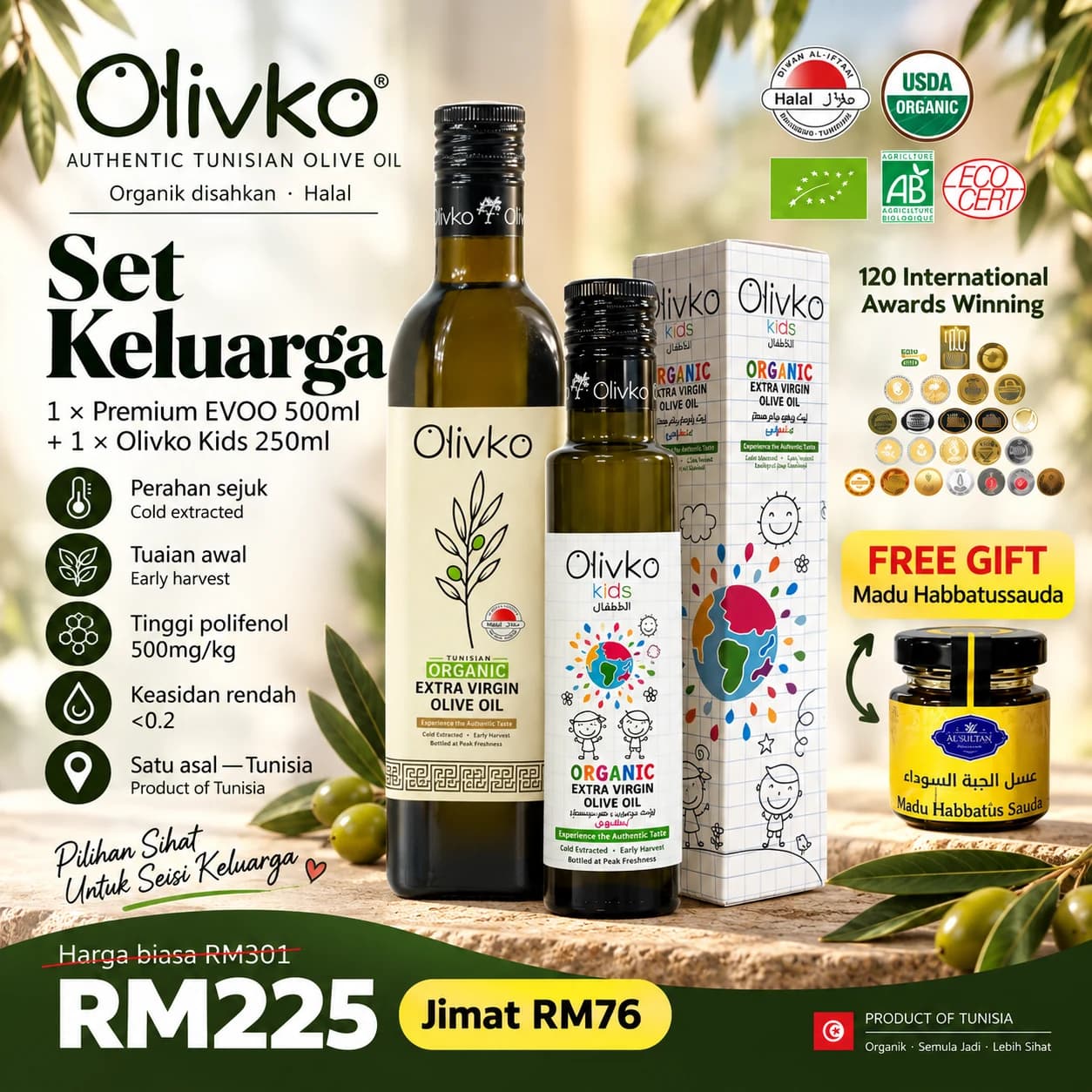
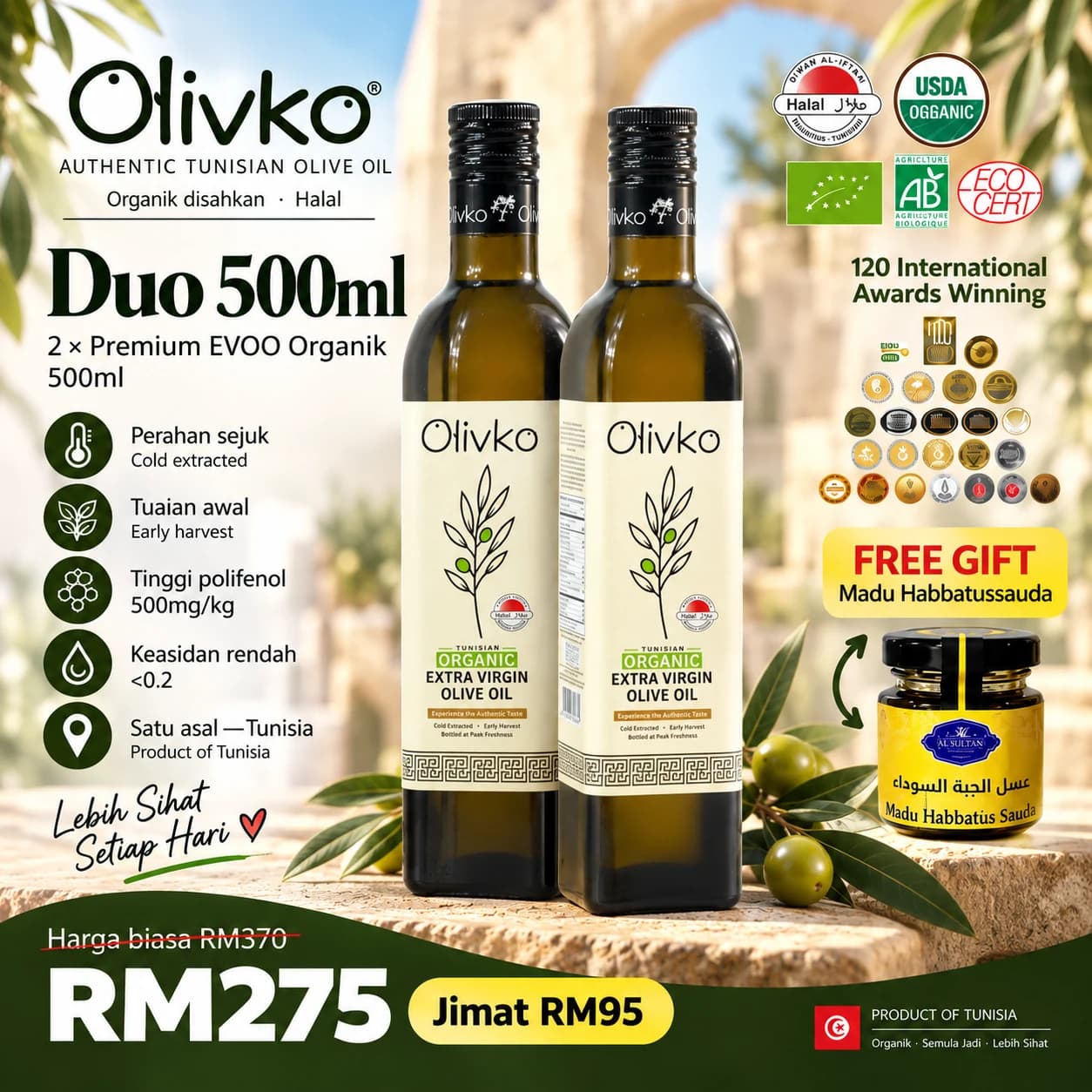
Olivko is harvested, pressed and bottled in Tunisia — one source from grove to bottle, with a laboratory report for its batch.