Real or fake
How to tell real olive oil from fake
The fridge test proves nothing. Here is what you can actually check.
10 October 2026 · 2 min read
Olive oil is one of the most frequently adulterated foods in the world. Usually it is not water or chemicals — it is refined olive oil, or a cheaper seed oil, blended in and sold as extra virgin. The problem is that you cannot see that difference by eye.
1. The fridge test does not work
You may have heard that if the oil solidifies in the fridge it must be real. It does not work that way. Olive oil contains a mix of fats that varies by olive variety and harvest season, so some genuine oils never solidify while some blends do. The International Olive Council does not recognise this test.
2. Ask for the free acidity figure
This is the test that actually means something. Free acidity measures how far the fats in the oil have broken down — the higher the number, the worse the condition of the fruit or the slower it was processed. The international standard allows up to 0.8% for extra virgin. That is a ceiling, not a target.
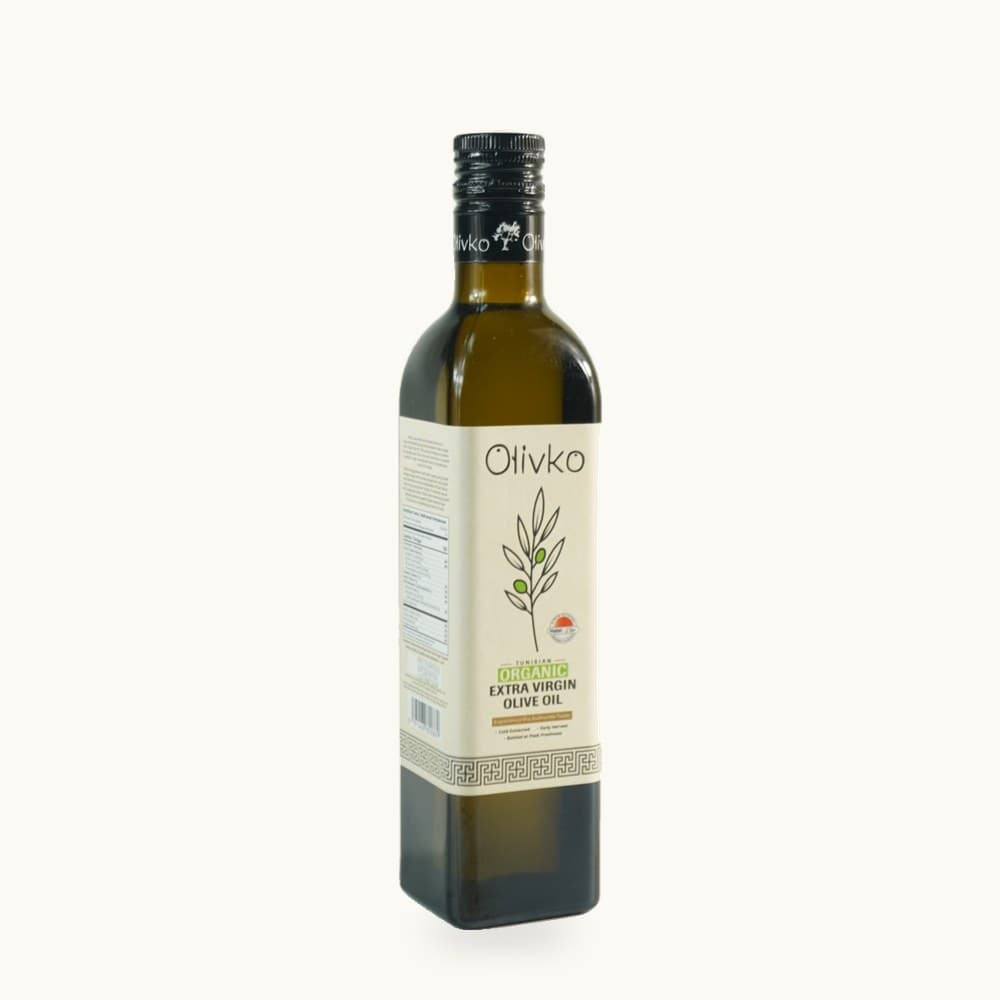
Olivko is tested by ONH Tunis (report N° 2025B1064, dated 17 March 2026) at 0.18% acidity — less than a quarter of the international limit. If another brand cannot give you their figure, that is an answer in itself.
3. Look for a harvest date, not just a best-before
Olive oil is not wine — it does not improve with age. A best-before date can be set two years from bottling without telling you when the fruit was actually picked. Serious producers state the harvest season.
4. Check for single origin
A label saying "packed in Italy" is not the same as "produced in Italy". Plenty of oil sold under European labels originates in several countries, is blended, then bottled elsewhere. Single origin oil comes from one source only — the fruit is harvested, pressed and bottled in the same place.
5. Taste and smell
Fresh extra virgin olive oil smells green — cut grass, sometimes tomato leaf or herbs. Swallowed, it often leaves a peppery catch at the back of the throat. That pepperiness comes from polyphenols and is a good sign. Oil that smells waxy, like cardboard, or of nothing much at all has likely been refined or has aged.
In short: forget the fridge test. Ask three things — what the free acidity is, where it came from, and when it was harvested. A confident seller will answer all three.