Quality & testing
The certificates on an olive oil bottle: what each one means
Each certificate answers a different question. None of them answers all of them.
18 October 2026 · 2 min read
An olive oil bottle can carry half a dozen logos, and most buyers do not know what separates them. It is worth knowing, because they answer entirely different questions.
Organic certificates: how it was grown
Ecocert, USDA Organic and EU Organic each have a written standard and an audit process. They restrict synthetic pesticides and fertilisers, and set a conversion period of several years before a grove's crop can be sold as organic.
What they do not tell you: when the fruit was picked, how fast it was pressed, or whether the oil meets the extra virgin standard. An oil can be organic and still be poor.
FSSC 22000 and BRCGS: how the plant is run
Both are food safety standards for a production facility rather than for a product. They audit hygiene, temperature control, traceability, pest control and recall procedures.
They matter if you are buying in volume for a business, because they tell you the plant runs under an audited system. They tell you nothing about how the oil tastes.
FDA registration: what it is and is not
This is the one most often misused in marketing. A facility exporting food to the United States must register with the FDA. That registration is a listing — it means the facility is known to the regulator.
It is not an approval, and not a certification. The FDA does not approve or certify food products in that way. Any bottle reading "FDA Approved" or "FDA Certified" is making a claim that does not exist. The correct term is FDA registration.
Halal
Olive oil is a pure plant oil, so halal questions usually concern processing, additives and handling rather than the ingredient itself. What matters is which body issued the certificate.
In Malaysia, the reference point is JAKIM. A certificate from a foreign body recognised by JAKIM is meaningful; the word "halal" with no issuing body named is not.
What none of them tells you
None of these certificates measures the quality of the oil in the bottle. For that you need a laboratory report: free acidity, peroxide value, and polyphenol content, with the laboratory's name and a report number.
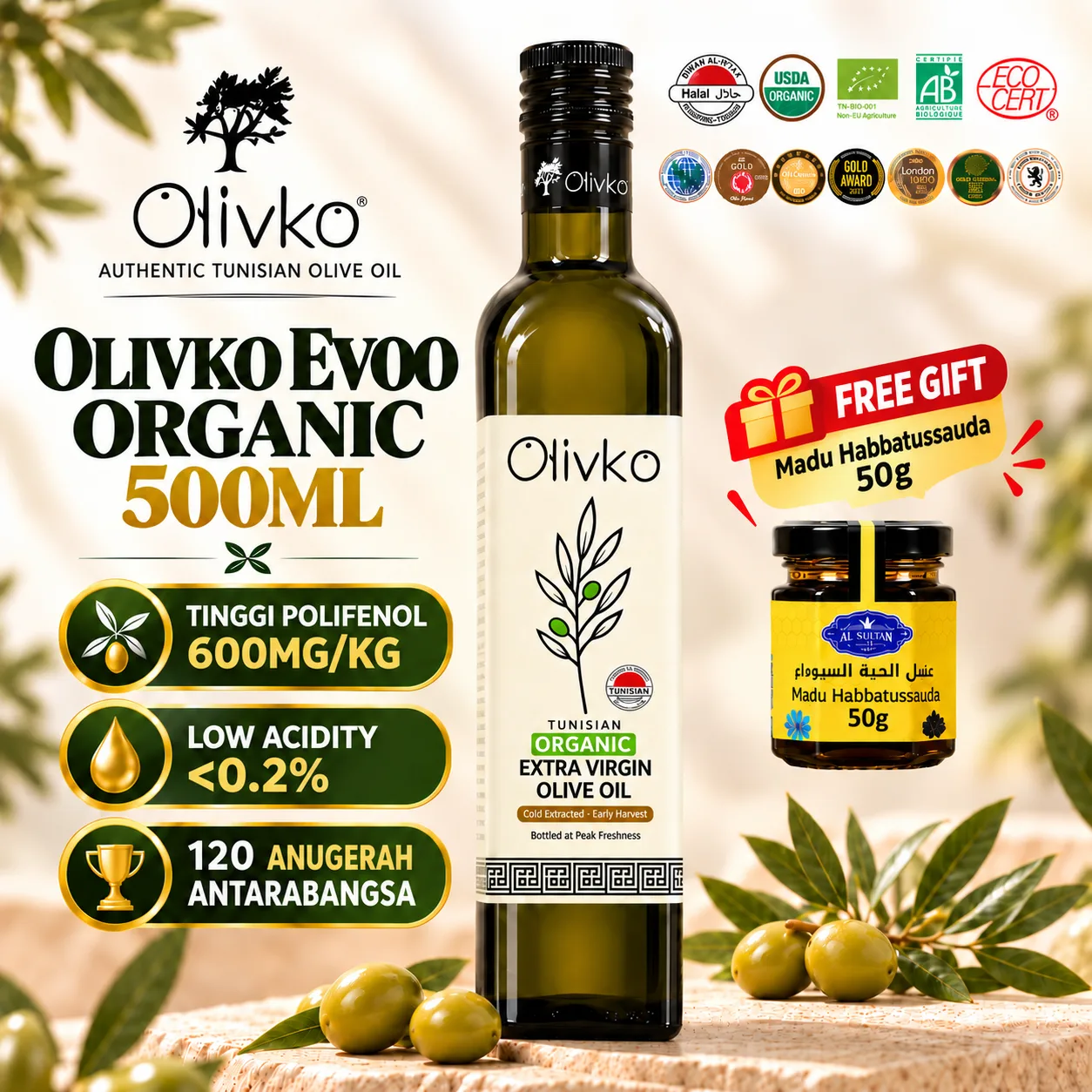
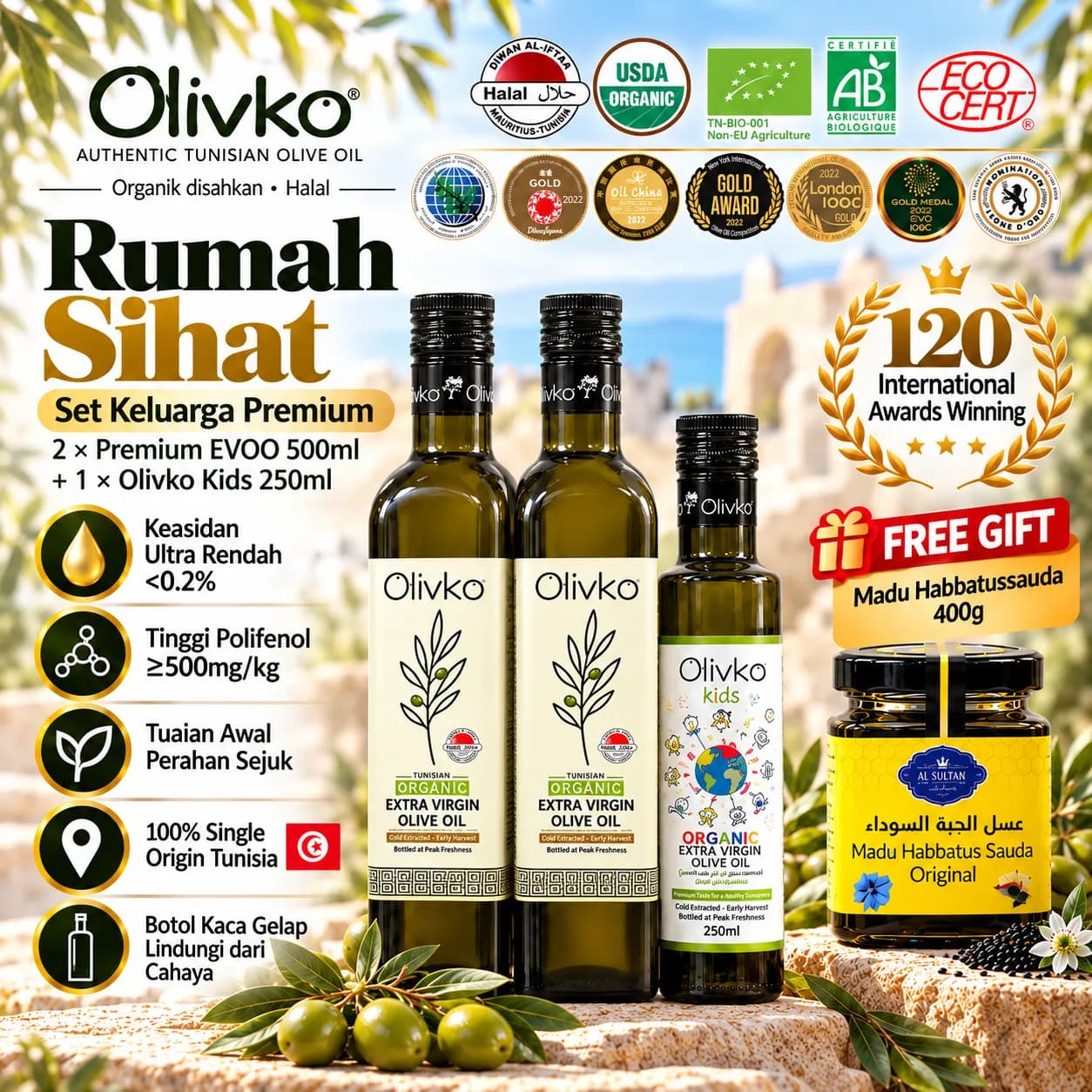
Olivko holds Ecocert, USDA Organic and EU Organic certification, FSSC 22000 and BRCGS food safety certification for its plant, FDA registration, and Halal recognised by JAKIM. Free acidity was tested at 0.18% by ONH Tunis, report N° 2025B1064.